

Message Infrastructure
What if your
message is an
enterprise problem?
Messaging goes beyond branding and marketing. It shapes how your company is understood by every stakeholder, inside and outside the enterprise.
Message Infrastructure is the system that helps a company communicate clearly, consistently and with more control as it grows. It brings together the company’s point of view, core messages, messaging rules, ready assets, translation logic and an AI-enabled validation layer into one common foundation.
It ensures that communication does not depend only on individual interpretation, memory or instinct. It gives leaders, teams and partners a shared system to communicate what the company stands for, across audiences, and formats.
A practical framework for turning scattered content into a recognisable leadership presence.

A practical framework for turning scattered content into a recognisable leadership presence.
Message Infrastructure
What if your
message is an
enterprise problem?
Messaging goes beyond branding and marketing. It shapes how your company is understood by every stakeholder, inside and outside the enterprise.
Message Infrastructure is the system that helps a company communicate clearly, consistently and with more control as it grows. It brings together the company’s point of view, core messages, messaging rules, ready assets, translation logic and an AI-enabled validation layer into one common foundation.
It ensures that communication does not depend only on individual interpretation, memory or instinct. It gives leaders, teams and partners a shared system to communicate what the company stands for, across audiences, and formats.
A practical framework for turning scattered content into a recognisable leadership presence.
Build the point of view.
Translate it into a messaging framework.
Keep it aligned through governance.
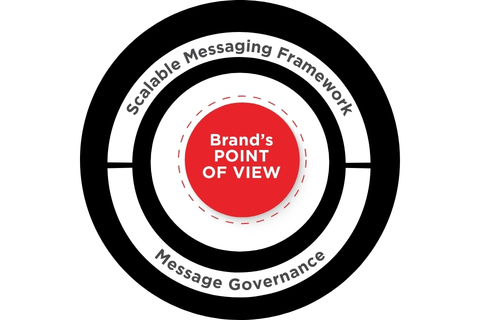
At the centre of every message system is a point of view. It is the lens through which the organisation understands its industry, customers, opportunities and role in the world. This lens also includes your message tonality, archetype and style.
A brand's point of view doesn't emerge from a single statement. It is built through two interconnected systems: a Scalable Messaging Framework that defines narratives, message pillars and articulation structures, and Message Governance that ensures every team applies them consistently.
Like two sides of the same coin, one provides the structure while the other sustains its integrity. Together, they create a clear, distinctive brand's point of view that scales across people, functions and channels without losing coherence.
Build the point of view.
Translate it into a messaging framework.
Keep it aligned through governance.
At the centre of every message system is a point of view. It is the lens through which the organisation understands its industry, customers, opportunities and role in the world. This lens also includes your message tonality, archetype and style.
A brand's point of view doesn't emerge from a single statement. It is built through two interconnected systems: a Scalable Messaging Framework that defines narratives, message pillars and articulation structures, and Message Governance that ensures every team applies them consistently.
Like two sides of the same coin, one provides the structure while the other sustains its integrity. Together, they create a clear, distinctive brand's point of view that scales across people, functions and channels without losing coherence.
Create your content and design libraries
Ensure that while the content changes by function and
purpose, the message system stays consistent.Reduce duplication, inconsistency and message
drift across the organisation.
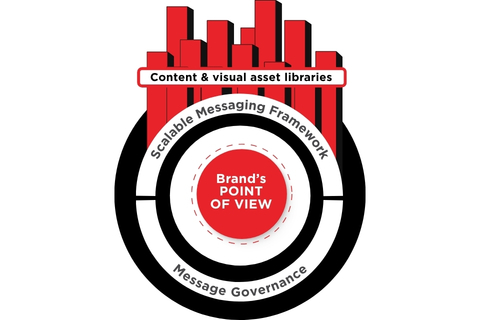
Once the core messaging is defined, it has to be made usable across the enterprise. Content and Design Libraries translate the core messaging into ready assets for these different functions, audiences and use cases.
Every function needs to communicate for a different purpose. People teams need recruitment, appraisal, culture, hiring and internal communication. Sales teams need pitches, proof points and customer stories. Leadership teams need investor, media and stakeholder communication. Sustainability teams need narratives for communities, regulators and partners.
These libraries can include company narratives, leadership notes, pitch decks, sales stories, proof points, case studies, employer brand content, internal communication templates, culture communication, investor content, sustainability content, visual systems, design templates and platform-specific content blocks.
Create your content and design libraries
Once the core messaging is defined, it has to be made usable across the enterprise. Content and Design Libraries translate the core messaging into ready assets for these different functions, audiences and use cases.
Every function needs to communicate for a different purpose. People teams need recruitment, appraisal, culture, hiring and internal communication. Sales teams need pitches, proof points and customer stories. Leadership teams need investor, media and stakeholder communication. Sustainability teams need narratives for communities, regulators and partners.
These libraries can include company narratives, leadership notes, pitch decks, sales stories, proof points, case studies, employer brand content, internal communication templates, culture communication, investor content, sustainability content, visual systems, design templates and platform-specific content blocks.
Ensure that while the content changes by function and purpose, the message system stays consistent.
Reduce duplication, inconsistency and message drift across the organisation.
Make the message travel
For each medium, the logic defines:
What should be emphasised
What tone should be used
What proof points matter
Every medium has its own role, audience, rhythm and expectation. Some mediums need depth. Some need simplicity. Some need proof. Some need emotion. Some need authority. Some need repetition. Some need a clear call to action.
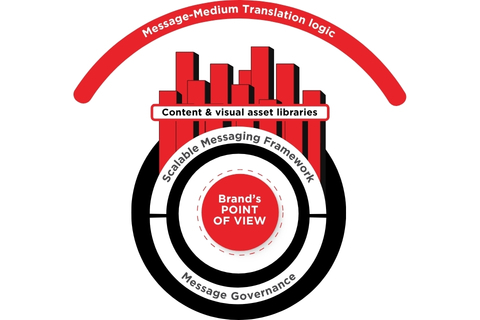
Translation Logic defines how the organisation’s core message should be adapted for each medium without losing its meaning.
This includes identifying the priority mediums for the enterprise and defining the role each one plays. These could include brand and communication mediums such as social media, PR, events, advertising, website, campaigns and thought leadership.
They could also include enterprise mediums such as board meetings, investor meets, town halls, leadership reviews, sales conversations, recruitment communication, partner communication and internal change communication.
Make the message travel
Every medium has its own role, audience, rhythm and expectation. Some mediums need depth. Some need simplicity. Some need proof. Some need emotion. Some need authority. Some need repetition. Some need a clear call to action.
Translation Logic defines how the organisation’s core message should be adapted for each medium without losing its meaning.
This includes identifying the priority mediums for the enterprise and defining the role each one plays. These could include brand and communication mediums such as social media, PR, events, advertising, website, campaigns and thought leadership.
They could also include enterprise mediums such as board meetings, investor meets, town halls, leadership reviews, sales conversations, recruitment communication, partner communication and internal change communication.
For each medium, the logic defines:
What should be emphasised
What tone should be used
What proof points matter
The future layer of message governance.
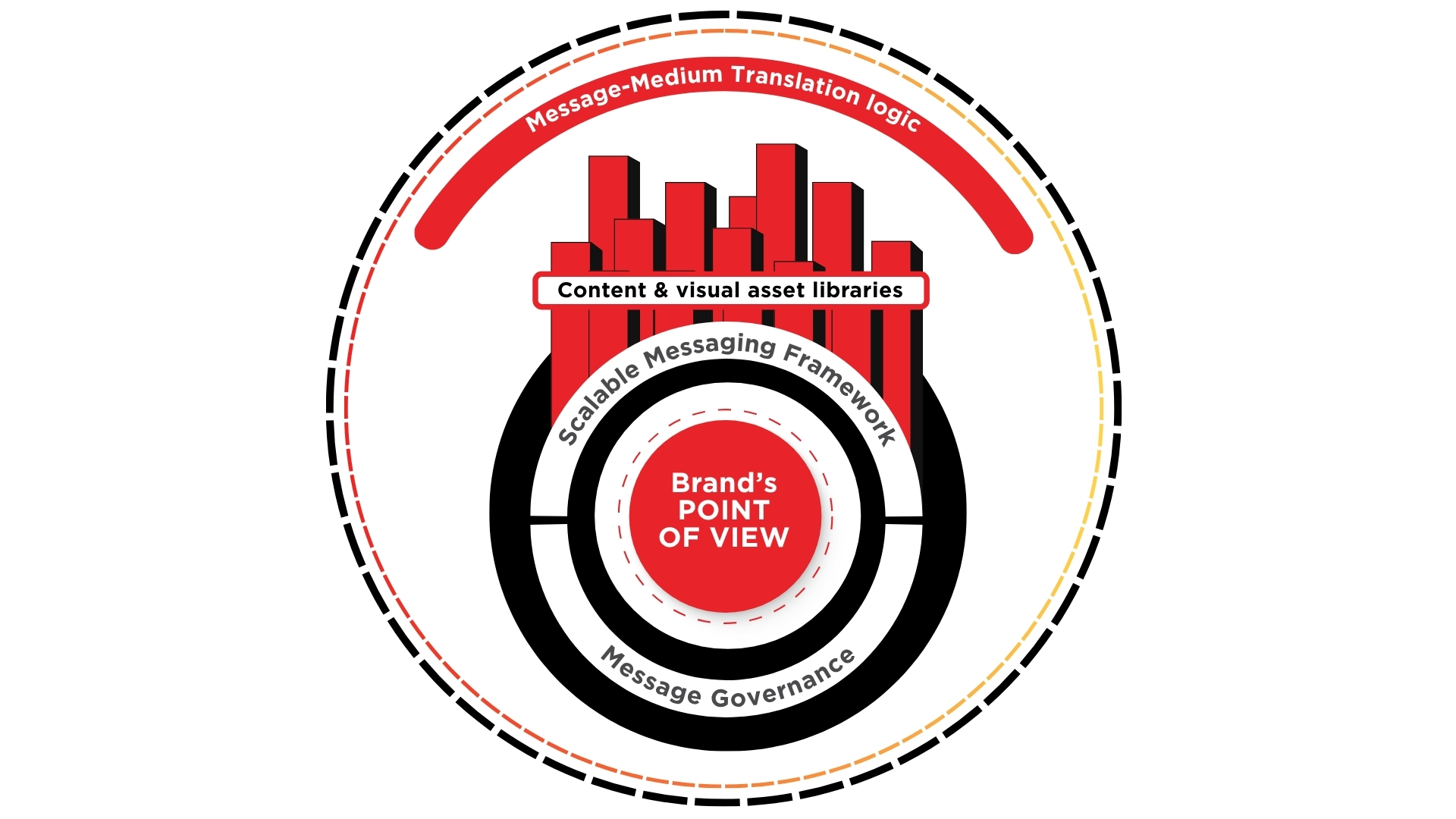
As organisations use AI more actively, communication will become easier to create but harder to control. More teams will create more content, more quickly, across more functions. The risk is communicating off message, inconsistent with the company’s tone, not aligned to its archetype, values or disconnected to the approved message framework.
This can give leadership stronger control over how the organisation communicates across functions, not just in marketing and brand communication, but also in sales, people communication, investor communication, internal communication, procurement, partner communication and leadership communication.
It will curate all AI conversations securely within the enterprise environment. This means the organisation can learn from how teams are using the message system, what questions are being asked, where confusion exists, and where the message infrastructure may need to be strengthened.
We see this as part of a larger message intelligence system.
The future layer of message governance.
As organisations use AI more actively, communication will become easier to create but harder to control. More teams will create more content, more quickly, across more functions. The risk is communicating off message, inconsistent with the company’s tone, not aligned to its archetype, values or disconnected to the approved message framework.
This can give leadership stronger control over how the organisation communicates across functions, not just in marketing and brand communication, but also in sales, people communication, investor communication, internal communication, procurement, partner communication and leadership communication.
It will curate all AI conversations securely within the enterprise environment. This means the organisation can learn from how teams are using the message system, what questions are being asked, where confusion exists, and where the message infrastructure may need to be strengthened.
We see this as part of a larger message intelligence system.
Five outcomes. One shared system
Consistency
Not saying different things in different places.
Speed
Teams do not start every communication from scratch.
Clarity
Every stakeholder understands what the company stands for.
Scale
Communication grows across teams, markets and moments.
Control
Core meaning does not get diluted as more people communicate.
Five outcomes. One shared system
Consistency
Not saying different things in different places.
Speed
Teams do not start every communication from scratch.
Clarity
Every stakeholder understands what the company stands for.
Scale
Communication grows across teams, markets and moments.
Control
Core meaning does not get diluted as more people communicate.
Start the conversation
If this is a conversation your organisation needs to have, we are happy to be the starting point.
Every organisation communicates every day. The question is whether that communication is working from a shared system, or depending on individual interpretation across teams, functions and moments.
If you are thinking about how to bring more clarity, consistency and control to the way your organisation communicates, we would be happy to speak.
Start the conversation
If this is a conversation your organisation needs to have, we are happy to be the starting point.
Every organisation communicates every day. The question is whether that communication is working from a shared system, or depending on individual interpretation across teams, functions and moments.
If you are thinking about how to bring more clarity, consistency and control to the way your organisation communicates, we would be happy to speak.


